[ Updated on January 15, 2026 ]
Politics from the perspective of journalism is typically obscure, complex, and a bit helter-skelter. Its baffling nature is shown by the countless news agencies that can’t adequately explain what it is that politics is dealing out to us from one day to the next.
However, politics from the perspective of psychology (that is, political psychology) is a bit more revealing. In a nutshell: good politics arise from people in good mental health; normal politics come from people who have normal personalities; and, bad politics erupts from people with numerous psychological disorders.
For now, I am using the following eight traits to roughly define personality (that is, individual psychology): 1.) Interpersonal Warmth (kind or mean); 2.) Integrity and Reliability: (trustworthy or unreliable); 3.) Emotional Resilience: (calm or anxious); 4.) Intellectual Openness: (curious or disinterested); 5.) Community Mindedness: (giving or taking); 6.) Objective Discernment: (fair or biased); 7.) Personal Depth (reflexive or deflective); and, 8.) Ego-Centrism (humble or grandiose).
So, someone with excellent mental health would rank high on the left side of each of these categories, that is: kind, trustworthy, calm, curious, giving, fair, reflexive, and humble. A person with normal mental health would be somewhere in the middle, perhaps 50/50. And, someone with numerous psychopathologies would rank high on the right side, that is: mean, unreliable, anxious, disinterested, taking, biased, deflective, and grandiose.
An analogy to us treating politics and psychology as a hierarchy would be how we think chemistry arises from physics, and biology from chemistry, and psychology from biology; thus, politics is an extension of psychology, and is closely related to sociology.
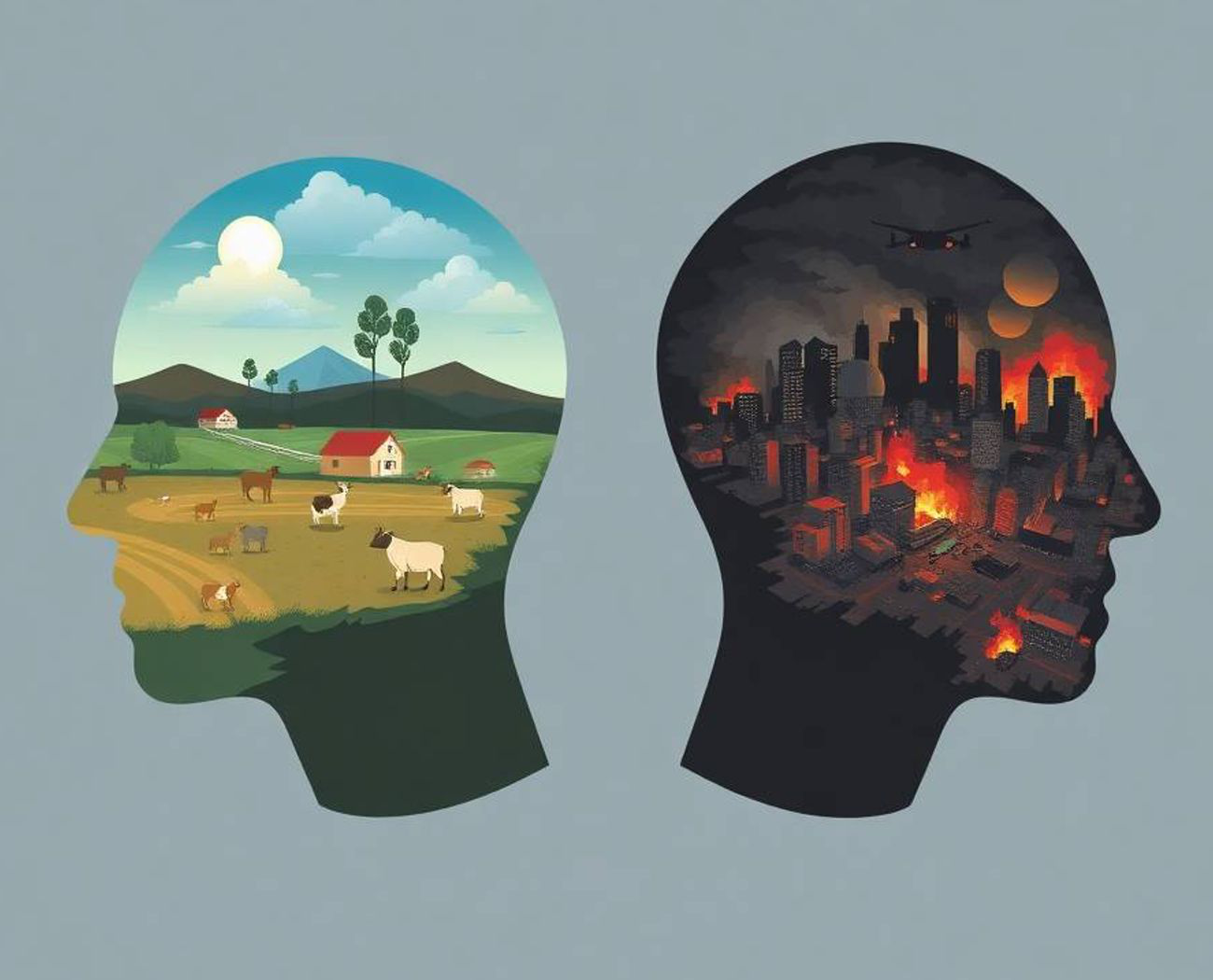
It seems to me that the type of political system that would be created by the first group (on the mentally healthy left) is liberal democracy (*) by necessity, while that of the third group (on the psychopathological right) would be fascism (**) also by necessity. And, I suppose the second group (in the normal personality middle) would yield various types of political systems for everything between.
Therefore, fascism and the destructive misery it brings is literally the product of sick minds. In contrast, liberal democracy and the happiness it yields is the product of healthy personalities.
Useful Definitions:
(*) Liberal Democracy = A system of government where the will of the majority is paired with the protection of individual rights. It is defined by free elections, the rule of law, and a constitution that limits the government’s power to ensure no one is above the law.
(**) Fascism = An extremist nationalist ideology that subordinates the individual to the needs of the state. It is characterized by dictatorial power, the forcible suppression of opposition, and the goal of national strength and purity through the exclusion or subjugation of perceived enemies.